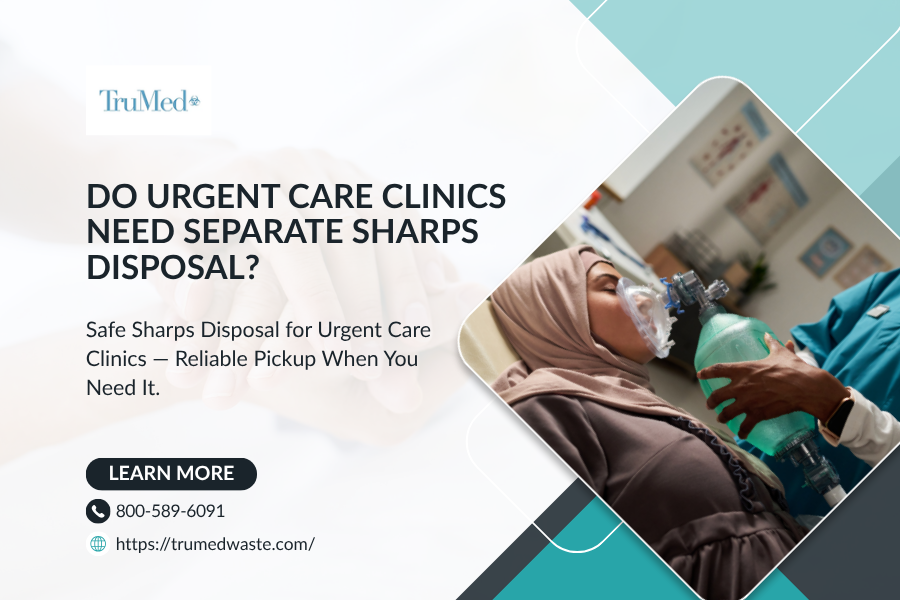
Yes. Urgent care clinics generally need a dedicated process for collecting, containing, and disposing of used sharps. Items such as needles, syringes, lancets, and other contaminated sharp instruments should not be placed in regular trash or handled like ordinary medical waste. A proper sharps disposal service helps urgent care facilities keep used sharps contained, reduce injury risks, and maintain an organized medical waste program.
Urgent care centers can generate sharps throughout the day, often from injections, blood draws, wound treatment, vaccinations, and other routine procedures. Because patients are treated quickly and staff may handle a high volume of waste, having the right containers and a reliable pickup process is important.
Why Do Urgent Care Clinics Need a Separate Sharps Process?
Sharps create a different type of risk from many other healthcare wastes. A used needle can puncture a trash bag, injure a member of the clinical team, or expose another person to potentially infectious material.
The goal is not necessarily to create an entirely separate waste management system for every type of sharps item. Instead, urgent care clinics need a clearly defined sharps collection and disposal process that keeps these materials separated from ordinary waste and managed through appropriate containers and services.
A good program should cover what happens from the moment a sharp is used until the container is removed for final treatment or disposal.
What counts as sharps?
Sharps can include:
- Hypodermic needles and syringes
- Lancets and blood-testing devices
- Needles used for injections or vaccinations
- Certain contaminated blades and scalpels
- Other sharp medical instruments capable of puncturing skin
Staff should follow applicable federal, state, and local requirements when determining which materials belong in sharps containers.
What Happens If Sharps Are Put in Regular Trash?
Putting used needles or other contaminated sharps into ordinary trash creates an avoidable safety problem.
A needle may stick through a garbage liner during collection. It can injure a healthcare worker, janitorial employee, waste handler, or anyone who comes into contact with the material later.
This is one reason urgent care clinics should establish simple rules for staff:
- Place used sharps directly into an approved sharps container after use.
- Never recap, bend, break, or manipulate needles unless a specific procedure requires it.
- Keep sharps containers accessible at points where procedures are performed.
- Replace containers before they become overfilled.
- Arrange proper collection, treatment, and disposal through an appropriate waste provider.
Clear procedures make sharps handling easier for both clinical and support staff.
Does Every Urgent Care Clinic Need Sharps Containers?

In most cases, yes. If a clinic uses needles, syringes, lancets, or other items that can puncture skin, it needs suitable sharps containers.
The number and size of containers will depend on the clinic’s procedures, patient volume, room layout, and how frequently containers are serviced.
For example, an urgent care facility that provides vaccinations may have different sharps volumes from a center that frequently performs blood draws, wound care, injections, and minor procedures.
The container should be placed where staff can dispose of the sharp immediately after use. Walking across a treatment area with a used needle creates an unnecessary exposure risk.
What should you look for in a sharps container?
A suitable container should be designed for sharps and provide secure containment. It should resist punctures and leaks and have a closure mechanism that helps prevent contents from escaping.
For clinics comparing options, this guide on best sharps disposal containers with leak-proof design reviews can help explain important container features and selection considerations.
How Does Sharps Disposal Work at an Urgent Care Clinic?
The process usually starts at the point of care. After a needle or other sharp object is used, it should go directly into the designated container.
Once the container reaches the appropriate fill level, it should be securely closed and handled according to the clinic’s waste procedures. The next step depends on the disposal arrangement the facility has established.
A professional sharps disposal service can help coordinate collection and appropriate downstream handling so clinic employees do not have to figure out how to manage filled containers themselves.
This is particularly useful for urgent care facilities with multiple treatment rooms or locations because consistent procedures can reduce confusion between staff members.
What About Small Urgent Care Clinics?
Smaller clinics sometimes assume they generate too little waste to need a formal sharps management process. That can be a mistake.
Even a small number of used needles can create a serious injury risk if they are handled incorrectly. A clinic may also generate other regulated medical waste alongside sharps, meaning its overall waste program needs to account for different waste streams.
The right solution does not have to be complicated. A small clinic can establish designated containers, train employees on proper disposal, monitor container usage, and arrange scheduled or on-demand collection based on its actual volume.
Can Sharps Be Sent Through a Sharps Mail Back Program?
For some healthcare facilities and waste volumes, a sharps mail back program can be a practical option. These programs are designed around shipping eligible sharps waste in approved packaging to an authorized processing or disposal facility.
A mail-back option may work well for smaller practices that do not generate enough sharps waste to require frequent traditional pickups.
However, urgent care clinics should evaluate their volume, storage needs, service area, applicable regulations, and the type of materials being handled before choosing a mail-back solution.
When might mail-back make sense?
A sharps mail back option may be worth considering when a facility has relatively predictable, lower-volume sharps generation and wants a shipping-based alternative to routine onsite pickup.
For larger urgent care centers, high-volume clinics, or healthcare groups with several locations, scheduled service may provide a more practical approach.
Need help deciding between mail-back and scheduled pickup? Get a quote from TruMed and discuss the waste volume and service setup that fits your clinic.
How Much Does Sharps Disposal Cost?
There is no single medical waste disposal cost that applies to every urgent care clinic. Pricing can depend on several factors, including waste volume, container size, pickup frequency, location, transportation requirements, and the services included in the agreement.
A clinic generating a few containers each month will have different needs from a busy urgent care center filling containers every week.
The best way to control costs is to understand how much waste the clinic actually produces and choose a service frequency that matches that volume. Over-servicing can increase expenses, while waiting too long can create storage and safety problems.
What About Insulin Needles and Other Patient-Generated Sharps?
Urgent care clinics may also encounter questions about insulin needle disposal, especially when patients bring used needles from home.
Staff should not assume that every patient-generated sharp can be handled in exactly the same way as clinic-generated waste. Facilities should establish clear procedures for accepting or refusing patient-generated sharps and follow applicable local requirements.
If the clinic accepts these materials, it should provide an appropriate container and ensure employees know how to handle them safely.
Sharps Container Disposal Should Be Part of the Waste Plan
Sharps container disposal should not be treated as an afterthought. Clinics need to know where filled containers are stored, who handles them, when they are removed, and which service provider manages the waste afterward.
This becomes even more important when an urgent care organization operates several locations. Standardized procedures can help every site follow the same basic waste-handling practices.
TruMed supports healthcare facilities with medical waste services designed around different facility types and waste streams. A properly organized program can help clinics manage sharps alongside other regulated healthcare waste without making daily operations unnecessarily complicated.
Have filled sharps containers piling up? Book a pickup with TruMed and keep your clinic’s waste area moving safely and efficiently.
What Should an Urgent Care Clinic Ask a Waste Provider?
Before choosing a provider, clinic managers should ask practical questions rather than focusing only on price.
Consider asking:
- What types of sharps waste does the provider accept?
- Are containers supplied as part of the service?
- How often can pickups be scheduled?
- Is emergency or on-demand service available?
- Can the provider serve multiple clinic locations?
- What documentation is provided for waste handling?
- Is mail-back available for lower-volume locations?
- How does the provider handle different regulated waste streams?
These questions can help a clinic compare providers based on actual operational needs.
Can You Use a Regular Medical Waste Provider for Sharps?
Yes, many healthcare waste providers handle both sharps and other regulated waste streams. However, the clinic should confirm exactly what services are included.
A medical waste disposal company may offer sharps collection along with biohazardous waste, pharmaceutical waste, pathological waste, or other regulated materials. Combining services can make waste management easier because the clinic has one established process and service relationship.
The key is making sure the provider is equipped and authorized to handle the specific waste generated by the facility.
What If You Search for “Sharps Disposal Near Me”?
Searching for sharps disposal near me can produce many options, but proximity alone should not determine which provider a clinic chooses.
Urgent care managers should consider service coverage, pickup schedules, container options, documentation, customer support, and the provider’s experience with healthcare facilities.
For multi-location urgent care groups, it is also useful to ask whether one provider can maintain consistent service across locations. A centralized waste program can simplify ordering, scheduling, and internal procedures.
Sharps Disposal Services in Your Area
TruMed provides sharps and medical waste services across a wide range of locations, including New York, Houston, New Jersey, Chicago, Los Angeles, Dallas, Boston, Raleigh, Miami, Atlanta, Cincinnati, Charlotte, Lake City, Rancho Cucamonga, Santa Monica, Detroit, Fort Lauderdale, Des Moines, Stockton, Sacramento, Burbank, Glendale, Anaheim, Santa Ana, Irvine, Pasadena, Oakland, Roseville, Elk Grove, Fairfield, and Altoona. Wherever your urgent care clinic is located. You can contact TruMed to discuss your sharps pickup needs, service frequency, and waste volume. Need sharps pickup in your area? Get a quote from TruMed and find the right service for your facility.
Tips for Keeping Sharps Disposal Simple
The safest sharps program is one staff can follow without hesitation. Keep containers close to where sharps are used, replace them before they become overfilled. And make sure new employees understand the clinic’s disposal procedures during onboarding.
It is also useful to review container placement periodically. If employees regularly have to walk across a room to reach a sharps container, the setup may need to be changed.
Tip: Track how quickly each treatment area fills its sharps containers. This simple information can help you choose better container sizes and service frequency while avoiding unnecessary pickups.
Final Takeaway: Does Your Urgent Care Clinic Need Separate Sharps Disposal?
Yes. Urgent care clinics that generate needles, syringes, lancets, or other contaminated sharps need a safe and appropriate process for collecting and disposing of them.
The most important steps are straightforward: use approved sharps containers, place sharps directly into the containers after use, prevent overfilling, train staff, and arrange appropriate collection or mail-back service.
For clinics that need a dependable sharps disposal service, TruMed can help assess your waste volume and service needs. Whether you operate one urgent care location or manage several facilities, the right setup can make sharps handling safer, more organized, and easier to manage.
Ready to make sharps waste management easier? Request a quote or schedule a pickup with TruMed today.